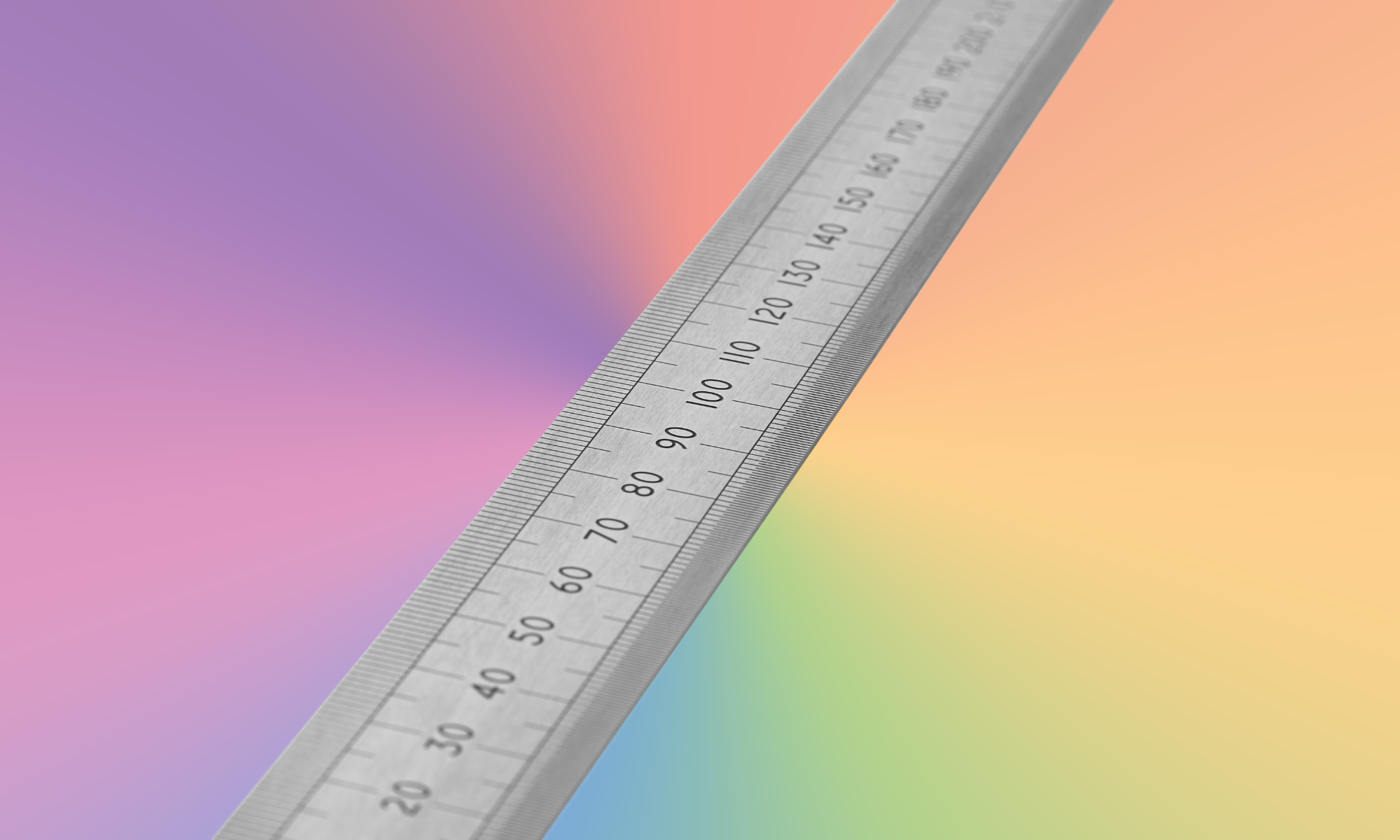

metre
SI base unit
| Name | Symbol | Quantity | |
| metre | m | length | |
 The metre, symbol m, is the SI base unit of length. The metre, symbol m, is the SI base unit of length.
The metre is defined by taking the fixed numerical value of the speed of light in vacuum c to be 299 792 458 when expressed in the unit m s−1, where the second is defined in terms of the caesium frequency ΔνCs. |
|||
| Definition | |||
 |
|||
Length
The relation between the speed of light in vacuum, c, and the caesium frequency, ΔνCs, forms the basis for the definition of the unit of length, the metre.
The definition of the metre implies the exact relation:

Inverting this relation gives an exact expression for the metre in terms of the defining constants c and ΔνCs :

The effect of this definition is that one metre is the length of the path travelled by light in vacuum during a time interval with duration of 1⁄299 792 458 of a second.
 Metric System